
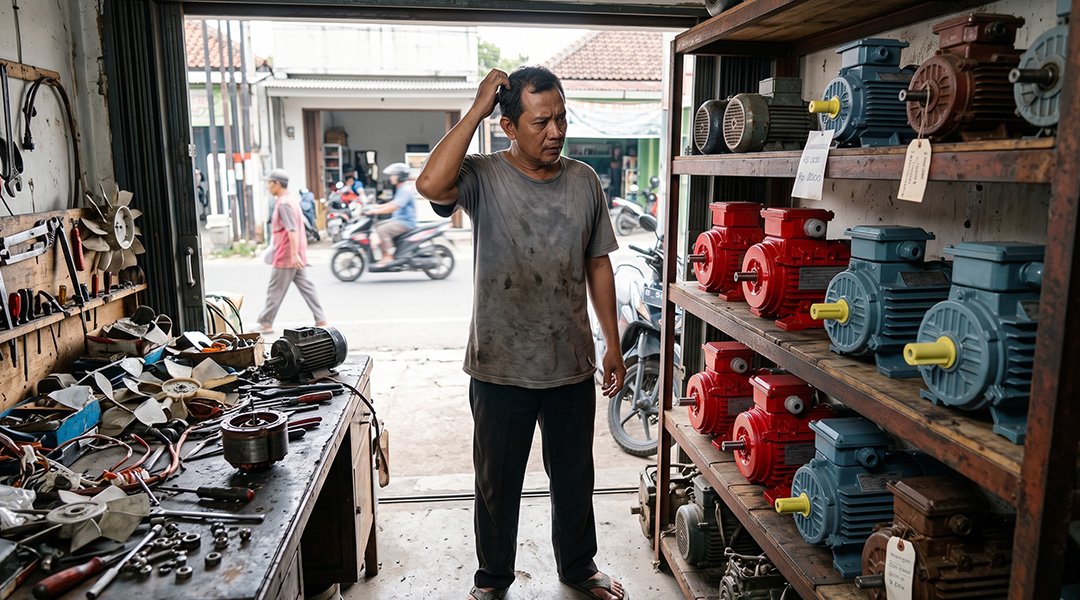
Energy-Efficient Electric Motor Selection Guide
Electricity costs drive operating overhead for lathe shops, rice mills, processing facilities. Motors run eight to sixteen hours daily. Inefficient units drain profits through wasted power. Nameplate horsepower ratings do not show complete operating picture. True efficiency depends on winding quality, rotor construction, proper sizing, sustained performance under full load.
Key Technical Factors for Electric Motor Efficiency
Electric motor efficiency represents mechanical output divided by electrical input. Review critical technical specifications before purchase for compressors, lathes, conveyors, agricultural pumps:
- Stator Winding Material
High-efficiency motors demand pure copper wire with Class F or Class H thermal insulation. Pure copper provides lower electrical resistance than aluminum alloy wire. Reduced resistance limits heat generation inside stator slots. Cooler operation cuts watt loss, extends winding life, lowers electrical demand.
- Power Sizing and Load Matching
Oversized motors running below fifty percent capacity drop power factor (cos phi). Current draw increases without producing useful torque. Undersized motors run past thermal limits, overheat quickly, consume excess current, face premature winding failure. Measure running load demand under peak production before selecting horsepower rating.
- Pole Selection and Operating RPM
Match motor speed directly to driven equipment requirements:
- Two-Pole (2800-3000 RPM): Best suited for air compressors, high-speed blowers, centrifugal suction pumps.
- Four-Pole (1400-1500 RPM): Industry standard for metal lathes, industrial mixers, grain threshers, belt conveyors requiring high starting torque, steady speed.
Speed reduction through extreme pulley diameter differences wastes mechanical energy through belt flex, friction losses.
Recommended Motor Brands: MKK, TPR, and NPPN
Istana Machineries stocks three proven induction motor lines built for tough operating environments, voltage fluctuations:
- MKK Motors (Heavy Duty and Precision Machining):
Engineered for lathe workshops, milling equipment, production lines. Features dense pure copper stator windings, precision-balanced rotors. Minimal machine vibration keeps shaft rotation stable, prevents amp spikes during sudden shock loads.
- TPR Motors (Tough Agricultural and Field Performance):
Built for dusty farms, grain drying blowers, irrigation pumps, hybrid setups. Rigid housing dissipates heat effectively in dirty environments. Heavy-duty windings tolerate voltage fluctuations common across rural electrical grids.
- NPPN Motors (High Power Factor for Continuous Duty):
Built for commercial shops, light-to-medium industrial plants running full shifts. Optimized power factor (cos phi) keeps running amperage low across long shifts, reducing daily electrical costs.
Practical Shop Tips to Cut Motor Operating Costs
- Align Shafts Accurately: Misalignment between motor shaft and driven load forces bearings to bind, increasing electrical current draw by 5% to 15%.
- Maintain Bearings on Schedule: Dry, worn bearings create friction drag, excess heat. Lubricate according to service intervals; replace noisy bearings before rotor drag causes motor burnout.
- Prevent Line Voltage Drops: Run properly sized copper wiring from main electrical panels. Undersized cable causes voltage drop, forcing motor to draw higher amperage under load.
Conclusion
Selecting energy-efficient motors requires checking copper winding purity, matching horsepower to actual load, choosing proper pole count. MKK, TPR, NPPN motors provide high electrical efficiency, mechanical durability, keeping productivity high without inflating operating expenses.
Buy Best Machinery & Spare Parts at Istana Machineries
Istana Machineries provides agricultural equipment, diesel parts, electric motors built for field durability, precision performance.
🔍 Explore our complete product catalog:
👉 https://istanamachineries.com/produk